Site Loader
SCF 113, Top Floor, Sector 65, Phase 11, Mohali (Chandigarh)

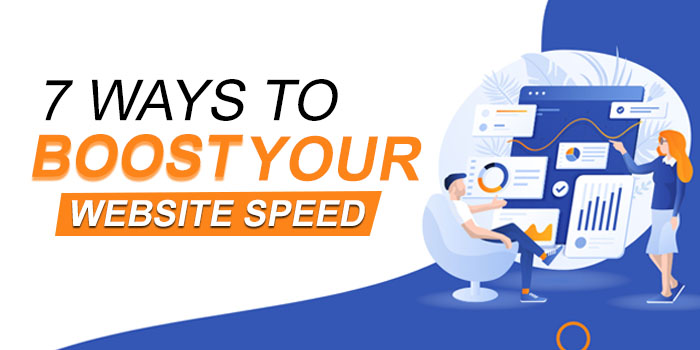
7 Ways to Boost Your Website Speed​

7-ways-to-boost-your-website-speed

Quick Enquiry

In today’s digital-first world, your website’s speed can make or break the user experience. Whether it’s a first-time visitor or a returning customer, no one likes waiting for a slow site to load. In fact, even a delay of a few seconds can cause users to bounce, which not only impacts your engagement but also your search engine rankings. That’s why improving website speed has become a top priority—not just for developers, but also for digital marketers.

A fast, responsive website builds trust, keeps visitors engaged, and boosts conversions across all DIGITAL MARKETING channels, from SEO and PPC to social media campaigns. There are several effective ways to achieve this, including compressing large images, minimizing code, enabling browser caching, and using a reliable Content Delivery Network (CDN). These strategies not only enhance performance but also ensure your content reaches the audience quickly and efficiently.

Remember, in the digital marketing landscape, speed equals success—so optimizing your website is a smart investment in your brand’s growth.

7 ways to boost your website speed

  1. Minimize HTTP request
  2. Content compression
  3. Reduce redirecting
  4. Improve server response time
  5. Choose the right hosting
  6. Reduce time to first byte
  7. Use CDN
  1. Minimize HTTP request – according to Yahoo 80% of web page loading time is spent on downloading different components of the website like images, style sheets, scripts, etc. The HTTP request is made for each of the elements. So more the components more will be the loading time.
  1. Content compression – compressing the content not only increases the content loading speed for the visitors but also the time taken for uploading the content on the website. There are a number of software out there that you can use for content compression like Gzip, HTML, JavaScript, etc.
  1. Reduce redirecting – we all experienced website redirecting once in a while. It takes an extra few seconds of visitors which may be irritating to them. It is possible that the user may switch to another website.
  1. Improve server response time – there are several factors influencing the server’s effectiveness and response time like the hosting you are using, the software that your server uses, the amount of traffic that your website is getting, etc. Server plays a major role in website speed.
  1. Choose the right hosting – the internet is becoming faster and faster so hosting should also make pace with it. Old hosting features cannot compete with a new one. Some small business what they do is they choose a cheap hosting option which results in slow page loading.
  1. Reduce time to first byte – apart from looking for the amount of time it takes to fully load your page you should also have to look the amount of time it s taking to start loading your page. Recommended TTFB by Google is less than 200 ms.   
  1. Use CDN (Content Distribution Network) – using Content Distribution Network will improve website speed as it is a cluster of servers that distribute the server load and translate to lower loading time.

Why Speed Matters: Stats You Can’t Ignore

Conversion boost: Pages loading in 1 s convert 3× more than those at 5 s—and 5× more than at 10 s.

Drop-off risk: Every extra second between 0–5 s reduces conversions by ~4.4%, and by 2.1% from 5–9 s.

Mobile urgency: 50% of mobile users abandon sites taking longer than 3 s.

SEO loses ranking: Google now uses page speed in ranking—or you risk losing visibility.

Conclusion

Improving your website speed is not just about better load times—it’s about creating a stronger, more reliable digital presence that drives results. A fast-loading website improves user experience, boosts your SEO rankings, and increases the chances of turning visitors into loyal customers. From compressing images and enabling caching to optimizing code and selecting the right hosting, every optimization step contributes to your site’s overall performance.

But speed is just one piece of the digital marketing puzzle. The most successful online marketers understand the power of combining SEO and PPC into one cohesive strategy. While SEO builds long-term visibility and trust, PPC delivers quick, targeted traffic—together, they create a complete roadmap for boosting conversions, generating leads, and maximizing ROI.

No matter which route you choose—organic or paid—ThinkNEXT Technologies is here to guide you. With expert-led training, hands-on experience, and real-world insights, ThinkNEXT empowers you to build a successful career in the fast-moving world of digital marketing. So, whether you’re optimizing your website or launching your career, take the first step with ThinkNEXT Technologies and unlock your potential in this exciting industry.