
Digital Marketing
How to Use Marketing Dashboards to Measure Campaign ROI
How to Use Marketing Dashboards to Measure Campaign ROI Are you struggling to understand


Are you preparing for an SEO job interview and want to feel confident walking into the room (or Zoom)? Whether you’re a fresher just starting your digital marketing journey or a professional brushing up on your SEO knowledge, mastering the most frequently asked SEO interview questions is essential. Search Engine Optimization is a core skill in today’s digital economy, and employers are always looking for candidates who understand both on-page and off-page strategies, technical SEO, and the latest algorithm trends. In this guide, we’ve compiled a list of the most relevant and up-to-date SEO interview questions and answers to help you impress your interviewer and land your dream job in DIGITAL MARKETING.
SEO stands for “search engine optimization.”
It’s the procedure of having site visitors from the “free,” “organic,” “editorial” or “natural” search results on search engines like Google.
Google defines a search engine as:
“a program that searches for and identifies items in a database that correspond to keywords or characters specified by the user, used particularly for finding particular websites at the World Wide Web.”
Q 3. Why are search engines so essential?
Search engines are the workhorses of the World Wide Web. They permit searchers to search out related data and internet sites without needing to have any technical expertise.
Q 4. What’s a domain?
Each site has an IP address, which is the location of the website. Quite than having to keep in mind other strings of numbers for every site you need to visit, we allocate a name to every domain which is easier to keep in mind.
Example: https://www.thinkpixel.in
Q 5. What’s internet/web hosting?

Internet hosting is access to space on a server to store a website. The server must be connected to the internet, which in most cases is thru a data center.
Q 6. What’s web crawling?
Crawling is the process where a Google bot systematically crawls the World Wide Web. It can also be referred to as a spider or spider bot and it’s in most cases to index or update pages.
Q 7. What’s a SERP?
Search Engine Results Pages (SERPs) are the pages displayed by search engines in response to a query by a searcher.
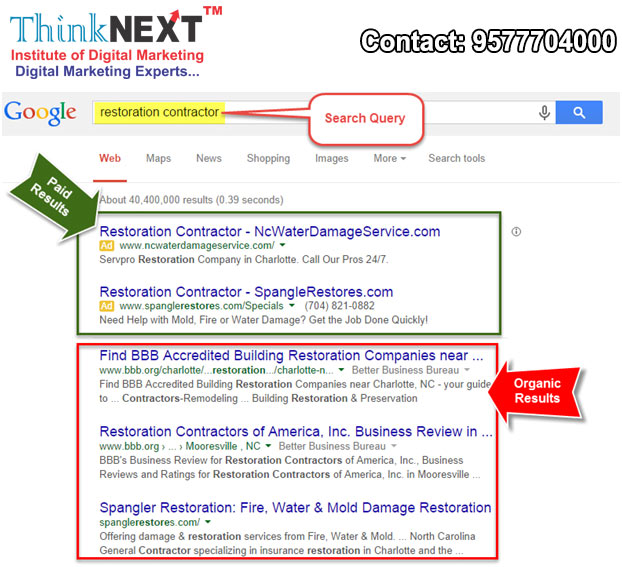
Q 8. What’s an organic search result?
Those are the unpaid search results displayed by Google in response to a query by a searcher, known as the SERPs (Search Engine Result Page). You’ll find them just under the paid results at the top of the web page.
Google Suggest or Autocomplete is a function offered by Google when we make a search.
A drop down box appears as we start typing in the search box, thus giving us options to finish our search.

Keywords are words or phrases that searchers might use in searches identified with your website’s content. It is also called as search queries.
Google will look at the image, metadata, and content on your page and try to figure out what the page is about by distinguishing specific keywords utilized routinely on the page in question.
Keywords are the association between what individuals are searching for and your website. Without the right ones, your website won’t focus the right searchers.
Choosing the correct keywords and using them, together with synonyms, in the correct places on your page (for example in headers and the first paragraph) will guarantee Google understands who will most benefit from discovering you. And most notably, searchers that are most likely to purchase.
On-page optimization (or On-page SEO) implies the changes you can execute on the website to optimize the site and increase upgrades in rankings. Changes can incorporate meta descriptions, content optimization, structuring, and increasing page-load speed.
Off-page SEO is the term we use to depict exercises, we perform on a site to improve rankings.
Google decides the trust, relevancy, and authority of a website by how it interacts with different sites and how individuals discover and connect with the site. By building backlinks from relevant, trusted sites you can improve your site’s rankings.
It’s not only just backlinks, Off-page SEO could also mean social bookmarking or social media marketing because traffic and references matter to Google as well.
Long-tail keywords are longer and increasingly explicit keyword phrases that searchers will most likely use in a search.
They generate far less traffic, they are very specific, but they are easy to rank for and they generate much better conversions as compared to larger root keywords because they are the types of searches people use when they are closer to a purchasing choice.
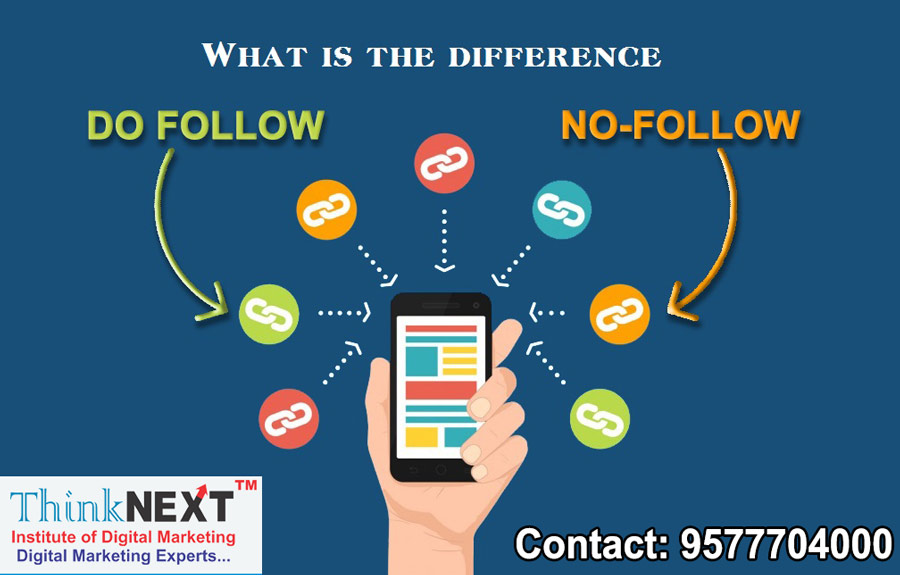
A do-follow link is a standard hyperlink that Google will follow and add to the general graph of the web.
Above all, for SEO, they pay “link juice” starting with one page to another.
However, a no-follow link is structured so that Google ignores the link and will not pass any link juice of SEO value starting with one page to another.
HTTPS means Hyper Text Transfer Protocol Secure. SSL means Secure Sockets Layer. The S in HTTPS stands for secure and that is basically what the update did. By making websites move to HTTPS you are encoding the information sent between your browser and the website, offering searchers a secure encounter.
Wikipedia clarifies it best when they characterize a Google Penalty:
“A Google penalty is the negative effect on a website’s search rankings dependent on updates to Google’s search algorithms or manual review. The penalty can be a by-product of an algorithm update or an intentional penalization for different black-hat SEO techniques.”
Basically, there are 4 main things to consider when looking to optimize your URLs. These are:
The greatest contrast between White Hat SEO and Black Hat SEO is that Blackhat doesn’t hold fast to the terms and conditions of Google’s search engine (among others).
Black Hat SEO generally utilizes link building strategies like blog outreach and PBNS that are built just to link to the site whereas true White Hat SEO will try to give their users the most ideal experience and and acquire links organically.
Here are some acceptable resources:
It is a measurement utilized by Ahrefs to grade how difficult a keyword would be to rank for. The higher the number the more difficult it would be.
Many differentiate between White Hat SEO and Black Hat SEO. With white hat SEO you’re admirers Google’s guidelines. With black hat, you’re taking measures that are outside of Google’s guidelines and may be utilizing results.
A website needs to be able to tell Google what the site is about and who would benefit from seeing it’s content to be search engine friendly.
You can do that by permitting that the content is written to include the keywords you want the page to be search for. Admirably, have the keywords or variations of them in the headers on the page. Basically you have meta-description and that your sitemap includes all the pages you want Google to find. Have clear URL structuring, and have a robot.txt for pages you don’t want Google to search . These are all the basics.
Contextual links are by the most powerful and valuable links that you can get. Usually, a link from the home page is also going to have the most value.
Cracking an SEO interview isn’t just about memorizing definitions—it’s about understanding how SEO works in real-world scenarios, being able to analyze websites, and showing a willingness to stay updated in this constantly evolving field. These questions and answers will give you a strong foundation, but don’t forget to continue exploring new SEO tools, trends, and algorithm updates. If you’re serious about building a career in digital marketing and SEO, ThinkPixel offers professional training programs designed to give you hands-on experience and placement support. Prepare smart, speak with confidence, and let your skills do the talking.
How to Use Marketing Dashboards to Measure Campaign ROI Are you struggling to understand
How to Create Data-Driven Marketing Campaigns That Convert Have you ever launched a campaign

Digital Marketing Certifications That Get You Hired Have you ever felt stuck even after
How to Learn Google Analytics: Beginner’s Guide Have you ever launched a marketing campaign

The Future of Marketing Lies in Data Storytelling? Are you struggling to explain your